
Note: This step is only for on-prem installations of the Humly Control Panel. If you have a cloud account, please skip this step.
Humly Control Panel should be installed on Ubuntu Linux 20 LTS, Ubuntu 22 LTS , or Ubuntu 24 LTS versions.
Ubuntu 24 LTS is supported from Humly Control Panel Version 2.3 onwards.
You can find Humly Control Panel downloads here.
Linux On-Premise Installation Prerequisites
- Ubuntu Linux 64 bit, 20 or 22 LTS. Ubuntu 24 LTS requires Humly 2.3 or later.
- A static IP address (required for HRD devices to connect to the server).
- The HCP server must be accessible through the firewall on HTTP and HTTPS ports. Default ports are TCP 3000 and TCP 3002.
- A user account with sudo permission.
- Accessible booking system (e.g., Exchange / Office 365) over HTTPS port TCP/443.
- Access to NTP server over port UDP/123.
- Internet access to download and install dependent packages via
apt.
Installation Steps
This guide uses Ubuntu Server 22 LTS connected via SSH.
- It is highly recommended to update and upgrade the OS and install the basic build packages before starting the installation. Run the following commands:
sudo apt install -y build-essential
sudo apt update
sudo apt upgrade - Download the latest Humly Control Panel version and copy the installation file to your server.
- Extract the installation file using the
tarcommand:tar -xzf installation_v*.tar.gz - A directory matching the HCP version should now have been extracted. Verify this by running the
lscommand. - Change to the newly extracted directory and run the installation script:
cd v1.* && sudo bash install.sh - The installation script will automatically detect the necessary tools and prerequisites required to run Humly Control Panel. To continue, select Yes by typing 1 and pressing Enter.
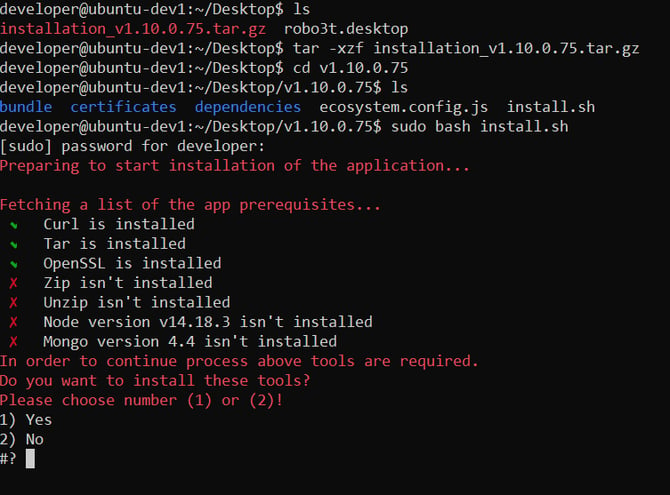
- Create credentials for the MongoDB database. MongoDB stores meetings, users, and Humly Control Panel settings. Set a username (e.g.
humly_user), then set and confirm a password (e.g.humly_pass), and set the database name (e.g.humly_db). Press Enter after each field.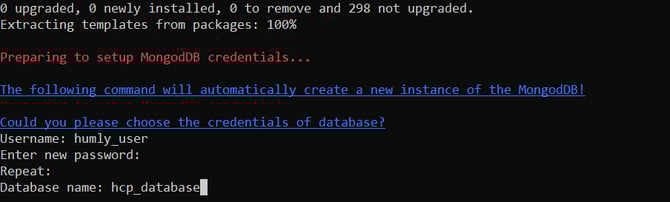
- Specify the database server address. The default is to install the database locally on the same server, in which case the address should be
localhost:27017. - Type the HTTP application port (default 3000) and press Enter.

- Set a memory limit for the HCP application. The recommended value is 4096 MB. The recommended amount may vary depending on the number of HRD devices connected to the server.

- The application should now have installed successfully and post-installation messages will appear.
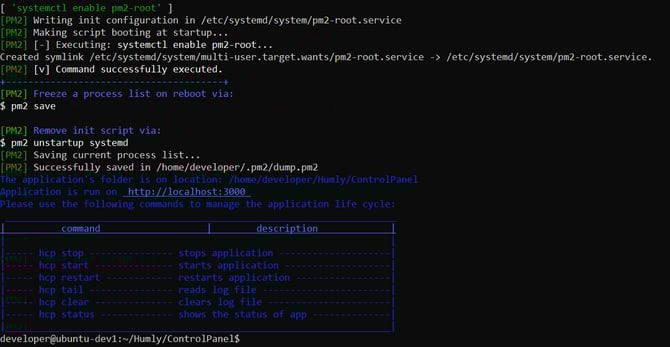
- You should now be able to access Humly Control Panel via a web browser on the configured HTTP application port (default 3000).
- You can remove the installation files as they are no longer needed:
cd .. && sudo rm -r installation_v*.tar.gz - HCP is now ready for booking system configuration.
- Open your web browser and navigate to
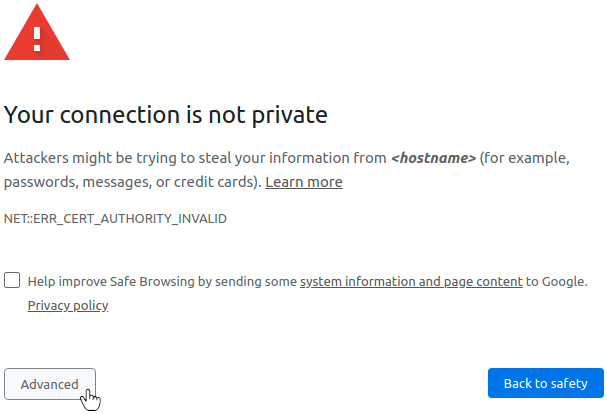
http://localhost:3000, orhttp://<server IP or FQDN>:3000if connecting from another machine. - Depending on your browser, you may see a certificate warning because the default certificate is self-signed. You can replace it with a public TLS certificate in a later step. For now, accept the certificate to proceed.
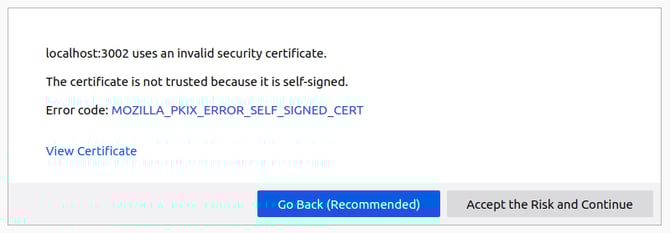
Once done with your initial setup, move on to Step 3: Connect HCP to Booking System.
Troubleshooting
Use the sections below if you run into issues during or after the Linux installation.
apt update / apt upgrade fails or packages cannot be downloaded
Possible causes:
- The server does not have internet access.
- DNS resolution is not working on the server.
- The apt package list is outdated or corrupted.
Steps to resolve:
- Verify internet connectivity by running:
ping -c 4 google.com - If DNS is failing, check
/etc/resolv.confand ensure a valid nameserver is configured. - Try fixing the apt package list by running:
sudo apt --fix-broken install
sudo apt clean
sudo apt update - Confirm that the server can reach the internet on port TCP/443, as some apt repositories require HTTPS.
tar extraction fails or the extracted directory is not found
Possible causes:
- The downloaded installation file is corrupted or incomplete.
- The file was downloaded with an incorrect name or to a different directory.
Steps to resolve:
- Verify the file exists and check its size:
ls -lh installation_v*.tar.gz
A very small file size may indicate an incomplete download. - Re-download the installation file from the official download page and transfer it to the server again.
- Ensure you are in the correct directory when running the
tarcommand:pwd
Installation script fails or exits with an error
Possible causes:
- Missing build dependencies or prerequisites.
- The script was not run with
sudo. - Insufficient disk space.
- MongoDB port 27017 is already in use.
Steps to resolve:
- Ensure that
build-essentialand all updates are installed before running the script (see Step 1 above). - Always run the installation script with
sudo:sudo bash install.sh - Check available disk space:
df -h. At least 40 GB of free space is required. - Check if port 27017 is already in use:
sudo ss -tlnp | grep 27017
If another process is using it, stop that process before re-running the installer. - Review the terminal output carefully for specific error messages and share these with Humly Support if needed.
Humly Control Panel is not accessible after installation
Possible causes:
- The HCP service is not running.
- A firewall is blocking ports TCP 3000 or TCP 3002.
- The wrong IP address or hostname is being used.
Steps to resolve:
- Check if the HCP service is running:
If it is not active, start it:sudo systemctl status humly-control-panelsudo systemctl start humly-control-panel - Check if the port is listening:
sudo ss -tlnp | grep 3000 - Verify that the Ubuntu firewall (UFW) allows the required ports:
sudo ufw allow 3000/tcp
sudo ufw allow 3002/tcp
sudo ufw reload - Try accessing the panel locally first:
http://localhost:3000. If this works, the issue is likely a network firewall between the client and the server. - Confirm you are using the correct static IP address or FQDN of the server.
MongoDB fails to start or credentials are rejected
Possible causes:
- The MongoDB service failed to start after installation.
- Incorrect credentials were set during installation.
- Port 27017 is blocked or already in use.
Steps to resolve:
- Check the MongoDB service status:
Start it if needed:sudo systemctl status mongodsudo systemctl start mongod - Verify that port 27017 is not in use by another process:
sudo ss -tlnp | grep 27017 - If the wrong credentials were entered during installation, you will need to uninstall and reinstall HCP, setting the correct MongoDB credentials during the re-installation.
- Check MongoDB logs for detailed error information:
sudo journalctl -u mongod --no-pager | tail -50
Browser shows a certificate warning or "Your connection is not private"
Possible causes:
- The default self-signed certificate is in use and has not yet been replaced with a trusted SSL/TLS certificate.
Steps to resolve:
- This is expected behaviour with a fresh installation. You can bypass the warning during initial setup by clicking Advanced > Proceed in your browser.
- To resolve the warning permanently, replace the self-signed certificate with a valid public TLS certificate. This can be done in the HCP settings after the initial setup wizard is complete.
- Contact your IT administrator or reseller for guidance on obtaining and installing a TLS certificate.
HCP service crashes or restarts repeatedly after installation
Possible causes:
- The memory limit set during installation is too low for the number of connected devices.
- The MongoDB service is not running, causing HCP to fail on startup.
Steps to resolve:
- Check HCP service logs for errors:
sudo journalctl -u humly-control-panel --no-pager | tail -100 - Ensure MongoDB is running before starting HCP (see MongoDB fails to start above).
- If the memory limit is causing issues, reconfigure it by re-running the installation script and entering a higher value (recommended: 4096 MB or more depending on device count).
- Verify that the server meets the minimum hardware requirements: 2 CPU cores, 4 GB RAM, 40 GB storage.
Still need help?
If none of the steps above resolve your issue, please create a support ticket and include the following information:
- The Ubuntu version (run
lsb_release -a) - The HCP installer version used
- A description of where in the process the issue occurred
- Any error messages from the terminal or installation output
- Relevant log output from:
sudo journalctl -u humly-control-panel --no-pager | tail -100
sudo journalctl -u mongod --no-pager | tail -50