
Humly Print Service (HPS) enables automatic printing of visitor labels and badges when used with Humly Visitor screens. This guide covers installation and configuration on both Windows and Linux (Ubuntu/Debian) systems.
Table of Contents
- Prerequisites
- Installation
- Managing the Service
- Printer Setup
- Troubleshooting
- Uninstallation
- Related Documentation
Prerequisites
Before installing HPS, ensure you have:
- Humly Control Panel version 1.16 or later
- Operating System:
- Windows: Server 2016, 2019, 2022, 2025, or Windows 10, 11
- Linux: Ubuntu 20.04, 22.04, 24.04 OR Debian 10, 11
- Network Access: Connectivity to your Humly Control Panel server
- Authentication: HCP Global Settings authentication token (see Step 6)
- Printer: Physical label printer or PDF printer for testing
- Administrative Access: Administrator (Windows) or sudo privileges (Linux)
Important: HPS cannot be installed on the same server as Humly Control Panel. Use a dedicated machine or separate virtual server.
Certificate Requirement: For on-premises Control Panel deployments, HCP must have a signed SSL certificate installed.
Installation
Windows Installation
-
Download the installer from the Humly Downloads portal using this download link.
Humly Download link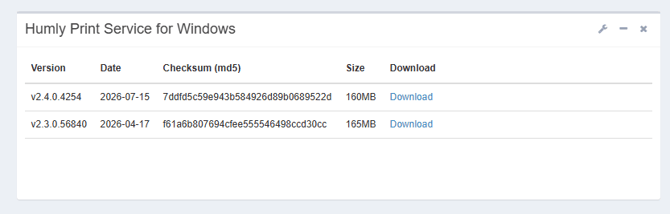
-
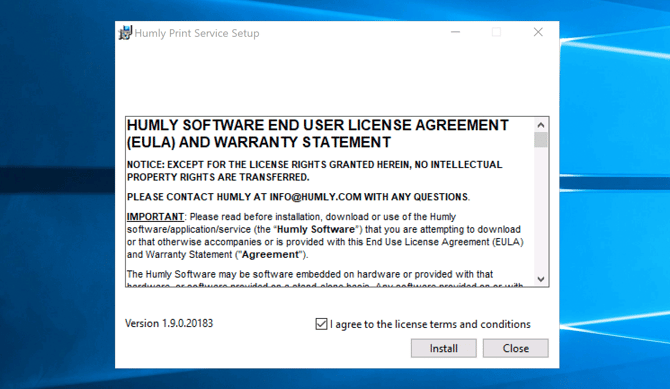
Launch the installer and accept the license terms
-
Click Install to begin the installation process
-
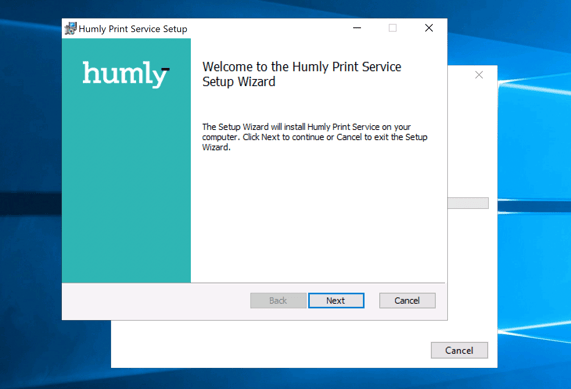
Click Next when the Setup Wizard launches
-
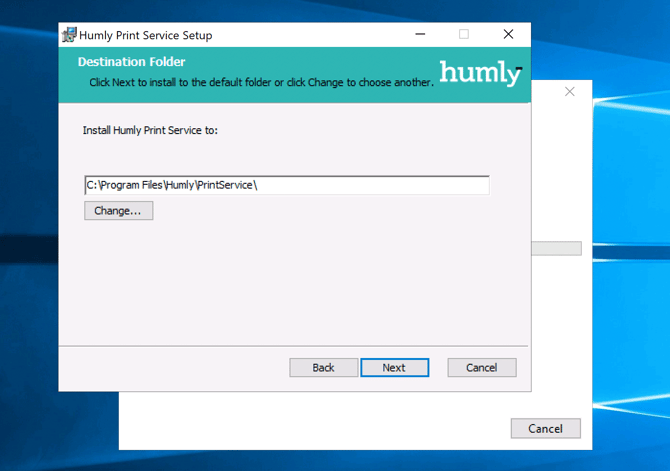
Select the destination folder where HPS will be installed (default is recommended)
-
Configure the HCP server URL:
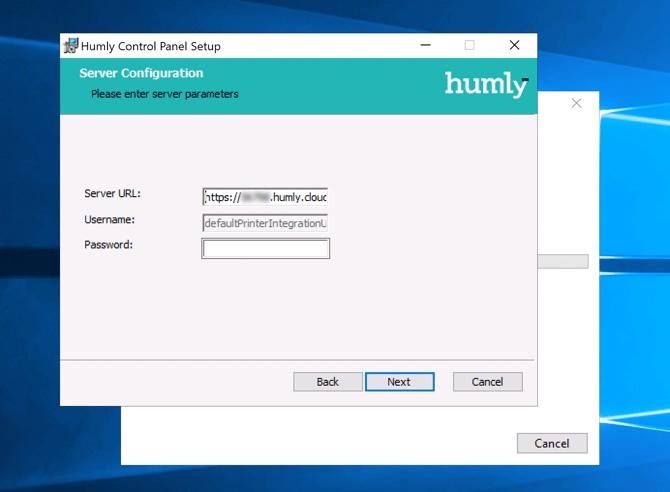
- For Humly Cloud:
https://<your-cloud-id>.humly.cloud - For on-premises HCP:
https://<your-hcp-server-FQDN>:3002
- For Humly Cloud:
-
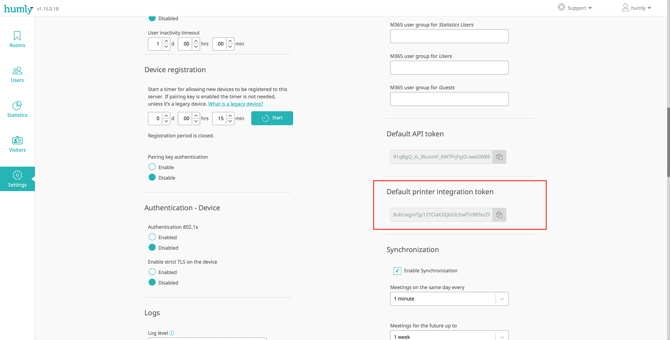
Obtain your authentication token:
- Log into Humly Control Panel
- Navigate to Settings > Global Settings
- Locate the Print Service Authentication Token section
- Copy the token value
-
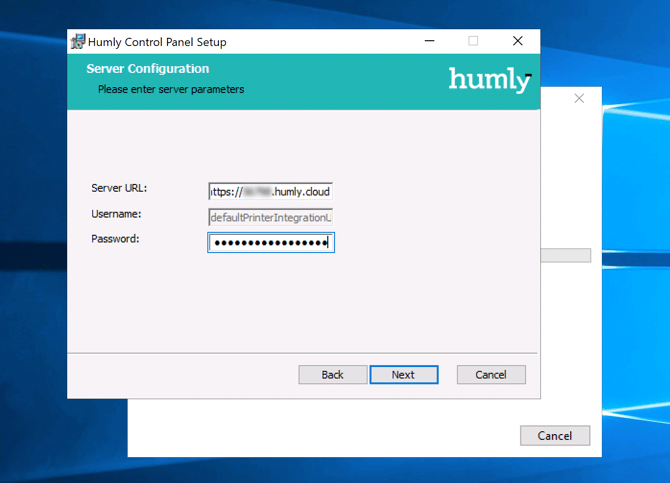
Enter the authentication token in the Setup Wizard password field
-
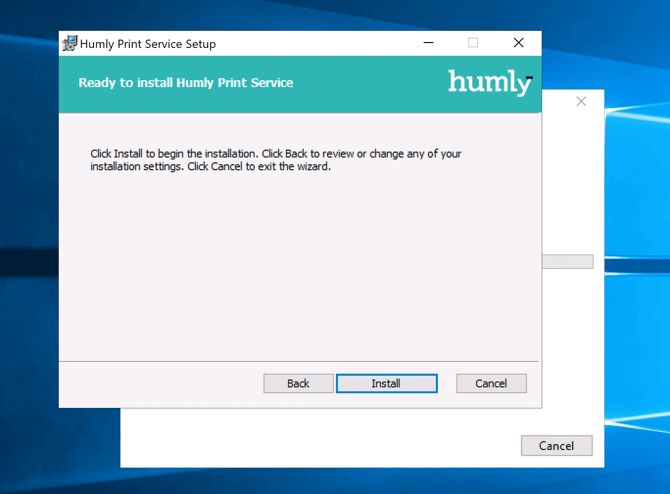
Click Next to proceed to the installation phase
-
Wait for the installation to complete
-
Click Finish to close the Setup Wizard
-
Restart the HPS Service:
- Open Windows Services (
services.msc) - Locate Humly Print Service
- Right-click and select Restart
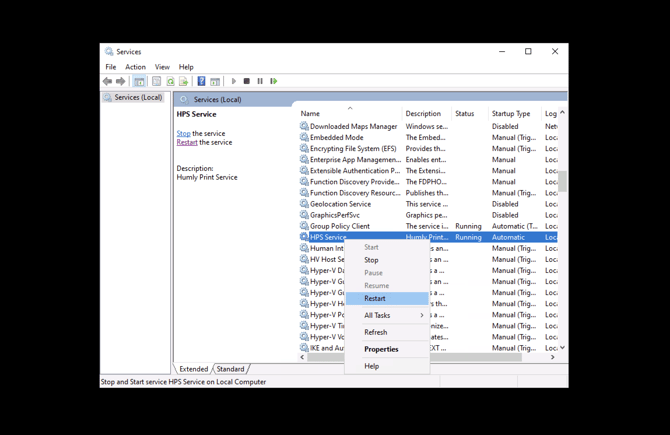
- Open Windows Services (
-
Verify the connection:
- Open a web browser
- Navigate to
http://localhost:3100 - Connection status should display "Connected"
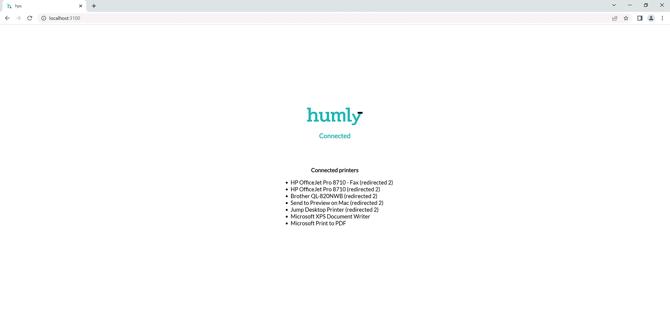
-
Identify your printer name:
- On the HPS web interface, view the list of connected printers
- Note the exact printer name (e.g., "Brother QL-820NWB")
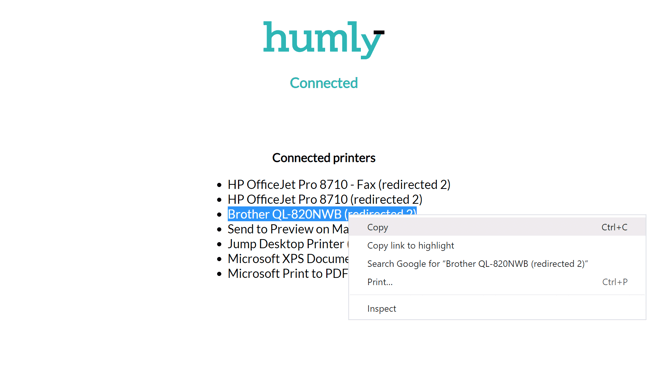
-
Configure your Humly Visitor Screen:
- In HCP, navigate to your Visitor screen settings
- Enter the printer name in the printer configuration field
- Save the configuration
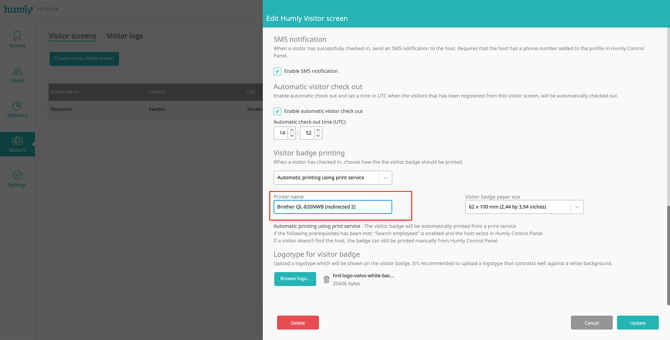
-
Test the setup: Check in a visitor and verify that the label prints automatically
Ubuntu/Debian Installation
-
Download the installation archive from the Humly Downloads portal
-
Extract the archive:
tar -xzf hps_installation_vX.X.X.X.tar.gz -
Navigate to the extracted folder:
cd hps_installation_vX.X.X.X -
Run the installation script:
sudo bash install.sh -
Configure HCP connection when prompted:
- HCP Server URL: Enter your HCP server address
- For Humly Cloud:
https://<your-cloud-id>.humly.cloud - For on-premises HCP:
https://<your-hcp-server>:3002
- For Humly Cloud:
- HCP Server URL: Enter your HCP server address
-
Obtain your authentication token:
- Log into Humly Control Panel
- Navigate to Settings > Global Settings
- Locate the Print Service Authentication Token section
- Copy the token value
-
Enter the authentication token when prompted by the installer
-
Wait for installation to complete (this includes automatic installation of CUPS printer system and dependencies)
-
Verify the connection:
- Check service status:
hps status - The service should show as running and connected to HCP
- Check service status:
-
Identify your printer name:
- Access the CUPS web interface:
http://localhost:631 - View available printers and note the printer name
- Alternatively, use:
lpstat -p -d
- Access the CUPS web interface:
-
Configure your Humly Visitor Screen:
- In HCP, navigate to your Visitor screen settings
- Enter the printer name in the printer configuration field
- Save the configuration
-
Test the setup: Check in a visitor and verify that the label prints automatically
Ubuntu Silent Installation
For automated deployments, use the silent installation mode with command-line parameters:
sudo bash install.sh -s -u https://hcp.example.com:3002 --username defaultPrinterIntegrationUser --password <your-token>
Optional parameters:
-m, --memory_limit- Set application memory limit in MB (default: 1024)-u, --server_url- HCP server URL--username- HCP username (default: defaultPrinterIntegrationUser)--password- HCP authentication token (can be found in HCP settings)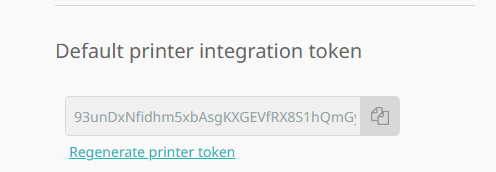
Managing the Service
Windows Service Management
Use Windows Services (services.msc) to manage HPS:
- Start: Right-click Humly Print Service > Start
- Stop: Right-click Humly Print Service > Stop
- Restart: Right-click Humly Print Service > Restart
- View Logs: Check Windows Event Viewer > Application logs
Ubuntu/Debian Service Management
Use the hps command to manage the service:
hps start      # Start the print service
hps stop       # Stop the print service
hps restart    # Restart the print service
hps status     # Show service status
hps tail       # View logs in real-time
hps clear      # Clear log files
Configuration file location: /home/<user>/Humly/PrintService/application_data/application.config.json
Log files location: /home/<user>/Humly/PrintService/application_data/logs/
Printer Setup
Windows Printer Configuration
-
Install printer drivers according to your printer manufacturer's instructions
-
Connect the printer:
- Physical connection: USB or network connection
- Add printer through Windows Settings > Devices > Printers & scanners
-
Verify printer visibility:
- Navigate to
http://localhost:3100 - Confirm the printer appears in the HPS web interface
- Navigate to
-
Test printing from Windows to ensure the printer works correctly
Ubuntu/Debian Printer Configuration
The installer automatically installs CUPS (Common UNIX Printing System) and a PDF printer (cups-pdf) for immediate testing.
PDF Printer:
- Allows HPS to function without physical printers
- PDF output location:
/home/<user>/PDF/ - Useful for testing visitor badge layouts
Adding Physical Printers:
-
Using CUPS Web Interface:
- Navigate to
http://localhost:631 - Go to Administration > Add Printer
- Follow the wizard to add your printer
- Note: You may need to log in with your system credentials
- Navigate to
-
Using Command Line:
sudo lpadmin -p PrinterName -v usb://path/to/printer -E -
List available printers:
lpstat -p -d
Note: The HPS service user is automatically added to the lpadmin group for printer management.
- Note that the web interface is localhost-only, if you are using headless Ubuntu, you can use SSH tunnel to access:
ssh -N -L 6310:localhost:631 <admin>@<host>, thenhttp://localhost:6310
Troubleshooting
Connection Issues
Problem: HPS shows "Disconnected" status
Solutions:
- Verify HCP server URL is correct and accessible from the HPS server
- Check firewall settings: Ensure port 3002 (or your HCP port) is not blocked
- Validate authentication token: Token may have been regenerated in HCP
- Check certificate: For on-premises HCP, ensure SSL certificate is valid
- Review logs:
- Windows: Event Viewer > Application logs
- Linux:
hps tailortail -f /home/<user>/Humly/PrintService/application_data/logs/hps.out.log
Printing Issues
Problem: Labels are not printing automatically
Solutions:
- Verify printer name matches exactly in Visitor screen settings (case-sensitive)
- Check printer status: Ensure printer is online and ready
- Test printer directly: Print a test page from the operating system
- Restart HPS service:
- Windows: Services > Humly Print Service > Restart
- Linux:
hps restart
- Check HPS connection: Verify HPS shows "Connected" status
Problem: Incorrect label format or cut-off text
Solutions:
- Verify printer model is supported (Brother QL series recommended)
- Check label size configuration in Visitor screen settings
- Update printer drivers to the latest version
- Adjust label template in HCP Visitor screen settings
Linux-Specific Issues
Problem: Permission denied errors
Solutions:
- Verify service user permissions:
sudo usermod -a -G lpadmin humlyHPSService - Check file permissions:
ls -la /home/<user>/Humly/PrintService/ - Verify home directory permissions:
sudo chmod 755 /home/<user>
Problem: Service fails to start after reboot
Solutions:
- Check PM2 startup script:
hps status - Reinstall startup script:
cd /home/<user>/Humly/PrintService
sudo -u humlyHPSService pm2 startup
sudo -u humlyHPSService pm2 save
Uninstallation
Windows Uninstallation
- Open Control Panel > Programs and Features
- Locate Humly Print Service
- Click Uninstall and follow the prompts
Ubuntu/Debian Uninstallation
Run the uninstallation script:
sudo bash /home/<user>/Humly/PrintService/dependencies/uninstall.sh
This removes:
- HPS application files
- Service user (humlyHPSService)
- PM2 process manager configuration
- Application configuration and logs
Note: CUPS and Node.js are not removed automatically as they may be used by other applications.
Related Documentation
Support
For additional assistance, contact Humly support:
- Support Portal: https://support.humly.com
- Email: support@humly.com
Next...
Learn how to configure a Humly Visitor screen by following the How to Configure a Humly Visitor Screen.
Install and configure our recommended visitor badge printer Brother QL-820NWB by following
the How to Install &, Configure the Brother QL-820NWB Visitor Badge Printer guide.